
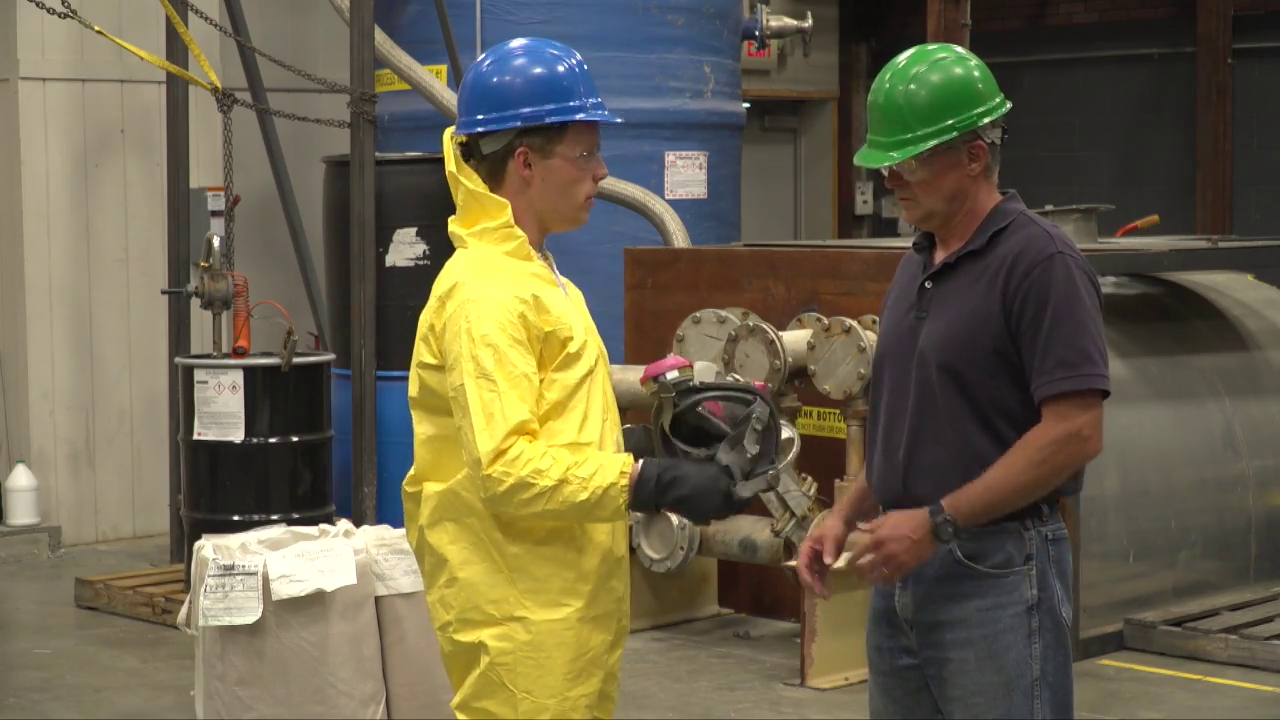
Most organizations understand the importance of safety training—but many focus only on the most obvious requirements. While core topics like fire safety or PPE are essential, gaps in training can leave employees exposed to preventable risks.
A more effective approach ensures employees are prepared for real-world situations—not just compliant on paper.
Here are 10 safety training topics every workplace should cover, including several that are often overlooked.

1. Slips, Trips, and Falls
One of the leading causes of workplace injuries across nearly every industry.
Employees should understand:
- Common hazards (wet floors, uneven surfaces, clutter)
- Proper housekeeping practices
- How to report and correct risks
2. Hazard Communication (HazCom)
Required in many workplaces, but often rushed or poorly retained.
Training should cover:
- Understanding Safety Data Sheets (SDS)
- Chemical labeling systems
- Safe handling and storage procedures

3. Personal Protective Equipment (PPE)
Providing PPE isn’t enough—employees need to know how and when to use it.
Include:
- Proper selection and fit
- Maintenance and limitations
- Real-world scenarios where PPE is critical
4. Lockout/Tagout (LOTO)
Essential for preventing accidental equipment startup during maintenance.
Even employees who don’t perform LOTO should understand:
- Why it’s used
- When it applies
- How to recognize LOTO procedures in action
5. Fire Prevention and Extinguisher Use
Many employees receive minimal fire safety training.
Effective programs should include:
- Classes of fire
- When (and when not) to use an extinguisher
- The P.A.S.S. method

6. Ergonomics and Repetitive Motion Injuries
Often overlooked because injuries develop over time rather than instantly.
Training should address:
- Proper lifting techniques
- Workstation setup
- Early warning signs of strain
7. Workplace Violence Prevention
A growing concern across industries.
Employees should learn:
- Warning signs of escalating behavior
- De-escalation techniques
- Reporting procedures and response protocols
8. Emergency Preparedness and Response
Many organizations have plans—but employees don’t always know them.
Training should include:
- Evacuation procedures
- Shelter-in-place protocols
- Communication during emergencies

9. Heat Stress and Cold Stress
Environmental risks are often seasonal—and easy to underestimate.
Cover:
- Symptoms of heat exhaustion, heat stroke, and hypothermia
- Hydration and rest strategies
- Protective measures based on work conditions
10. Mental Health and Fatigue Awareness
An emerging but critical area of workplace safety.
Fatigue and stress can increase the risk of accidents.
Training should highlight:
- Recognizing signs of fatigue and burnout
- The impact on safety and decision-making
- When to speak up or seek support
Closing the Gaps in Your Safety Program
Covering these topics doesn’t just help with compliance—it helps prevent incidents, reduce downtime, and protect your workforce.
The most effective safety programs go beyond the minimum requirements. They identify real risks, reinforce key behaviors, and make training relevant to everyday work.
If you’re reviewing your safety training, it’s worth asking:
Are we covering what’s required—or what’s actually needed to keep our people safe?